Blog
Published on: 13/10/2026
Dentures Hornsby: A Complete Guide to Cleaning and Maintenance
Missing teeth affect far more than how your smile looks, since chewing becomes harder, certain sounds get difficult to pronounce, and your lower face can gradually lose support as the jawbone beneath the gaps shrinks. Dentures are removable appliances that replace missing teeth, and modern versions look far more natural and sit more comfortably than older designs. This blog article explains how dentures work, the options available, what to expect during treatment, and how to care for them. Winning Smiles Dentists helps patients explore which denture solution suits their situation.
What Are Dentures and How Do They Work?
A denture is a custom-made removable appliance carrying artificial teeth on a gum-coloured base. Full dentures rest on the gums and stay in place through suction and the shape of the jaw ridge, while partial dentures clip onto remaining natural teeth. Dentures support chewing, though even well-fitting ones provide less bite force than natural teeth. They also help you speak clearly, restore lip and cheek support, and improve your smile and confidence. Before recommending a denture, your dentist examines your gums, remaining teeth, jawbone ridge, and bite, because a denture built over inflamed gums or an untreated tooth rarely lasts.
Who May Benefit from Dentures?
- People missing several teeth in one or both arches.
- Anyone who has lost all their teeth in the upper or lower jaw.
- Patients with severely damaged teeth that cannot be restored.
- Those wanting a removable, non-surgical alternative to implants or bridges.
- Patients needing a temporary solution during longer treatment.
Different Types of Dentures Available in Hornsby
Full dentures
Replace all teeth in one or both arches, sitting directly on the gum ridge. Lower dentures need particular attention, since the lower jaw offers a narrower ridge for grip than the upper palate, and shares that space with a moving tongue and cheeks.
Partial dentures
Replace several missing teeth while remaining natural teeth provide support, usually through clasps or precision attachments. They also stop neighbouring teeth from drifting into the gap over time.
Immediate dentures
Are made in advance and fitted soon after extraction, so you are not left without teeth while healing. Your gums change shape considerably afterwards, so adjustments, relines, and sometimes a replacement are a normal part of this process rather than a sign something has gone wrong.
Implant-supported dentures
Use dental implants to anchor the denture firmly, reducing movement significantly. Suitability depends on bone health and medical history, so a consultation is required to confirm whether this option suits you.
Signs You May Need to Consider Dentures
- Avoiding certain foods, or chewing only on one side.
- Multiple missing teeth affecting everyday meals.
- Loose, broken, or badly decayed teeth.
- Noticeable changes in speech, such as lisping.
- A sunken appearance around the mouth or reduced lip support.
- Feeling self-conscious when smiling or speaking.
An examination can confirm whether dentures are the right choice, since sometimes bridges, implants, or saving your remaining teeth gives a better long-term result.
What to Expect During the Denture Treatment Process in Hornsby
Most denture treatment takes four to six appointments across three to six weeks.
Initial consultation:
Your dentist reviews your dental and medical history, including medications that cause dry mouth saliva matters for denture retention. They examine the gums, jaw ridges, remaining teeth and bite, then discuss your lifestyle, appearance goals and budget alongside the alternatives.
Impressions and measurements:
Impressions or digital scans capture the shape of your mouth. Further measurements record how your jaws relate, how much tooth shows when you smile, and where the bite should sit. Tooth shade, shape, size and gum colour are chosen at this stage bring an old photo if you want a particular look.
Denture Fitting and adjustments:
At fitting, the denture is checked for comfort, stability, bite balance and appearance. Almost every new denture needs one or two adjustments in the following fortnight. Report rubbing, sore spots, looseness or difficulty chewing rather than persisting small pressure spots are quick to relieve and painful to ignore.
Follow-up appointments:
Follow-ups during the settling period let your dentist check gum health, fit and bite alignment, and identify when a reline, repair or adjustment is needed. Relines are typically required every two to three years as the ridge changes shape.
Benefits of Choosing a Hornsby Dental Practice for Dentures
Local care matters more for dentures than most treatments, since the appliance needs adjusting repeatedly in the first month and reviewing for years afterwards.
Choosing dentures Hornsby residents can reach easily means:
- Short trips for the adjustments that make the difference between tolerable and comfortable
- Treatment planned around your oral health rather than a standard design
- Professional assessment of fit, bite and function over time
- Practical help with cleaning and maintenance
- A conversation about alternatives before committing
- Continuity from a team that knows your dental history
- Genuine confidence eating, speaking and smiling
How to Care for Your Dentures in Hornsby
Clean Them Daily
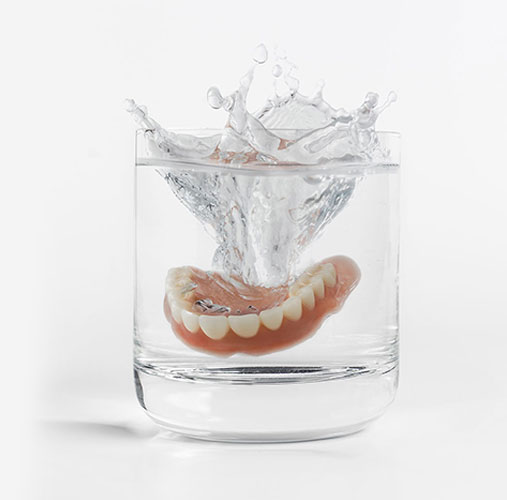
Rinse dentures after meals where possible, and brush them once a day with a soft denture brush and a denture-specific cleaner. Avoid regular toothpaste, since it is often too abrasive and can scratch the surface, and never use hot water, which can warp the shape permanently. Clean your gums, tongue, and remaining natural teeth separately, and leave dentures out overnight in water or a soaking solution, since wearing them constantly raises the risk of gum irritation and fungal infection.
Handle Them Carefully
Clean your dentures over a folded towel or a basin of water, since they fracture easily on a hard surface. Never bend clasps yourself, attempt a home repair, or use household glue on a crack, as this is toxic and usually makes the denture unrepairable. Keep dentures out of reach of children and pets.
Attend Regular Dental Check-Ups
Your mouth keeps changing after teeth are lost, so a denture that fits well today may feel loose in a year or two. Regular check-ups also screen for gum irritation and other oral health changes, so dentures should be reviewed annually even when they seem to be working well.
Common Denture Problems and How They Can Be Managed
Loose dentures
Looseness usually reflect changes in your gums rather than a faulty appliance, and a professional reline is often the solution. Adhesive can help short term, but relying on more of it without review lets the underlying fit worsen.
Sore spots and gum irritation
Pressure points are common in the first couple of weeks and are usually relieved with a quick adjustment. Contact your dentist if soreness continues beyond a few days.
Difficulty speaking or eating
Adaptation is normal. Speech usually settles within two to four weeks, and reading aloud speeds it up. Start with soft foods cut small, chew on both sides at once to stabilise the denture, and reintroduce firmer foods gradually. Ongoing difficulty after a month warrants review.
Cracked or broken dentures
Stop wearing it and book an appointment. Many cracks, chips and broken teeth are repairable often within a day — but only if the pieces haven’t been glued or filed. Whether repair or replacement makes sense depends on the damage and the denture’s age.
How Long Can Dentures Last?
Well-made dentures typically last 5 to 10 years, depending on material, cleaning habits, and how your mouth changes over time.
Signs it’s time for a review or replacement:
- Persistent looseness despite a reline
- Cracks, chips or visibly worn teeth
- A bite that feels different or uneven
- Ongoing gum irritation or sore spots
- Increasing difficulty chewing
- Loss of facial support, or a collapsed appearance
The limiting factor is usually the bone underneath rather than the denture itself. Regular reviews and timely relines extend a denture’s life meaningfully, but eventually every denture needs replacing as the mouth changes.
Why Choose Winning Smiles Dentists for Dentures in Hornsby?
At Winning Smiles Dentists, our local Hornsby dental team focuses on personalised, practical care. We begin every denture consultation with a thorough examination of your gums, ridges, and bite, followed by an honest discussion of your denture options and any suitable alternatives. Our emphasis is on comfortable fitting, clear communication about costs and stages, and genuine follow-up support to help your dentures last. We are also open 7 days a week, making it easier to fit an assessment around your schedule.
Our focus is on delivering personalised care that supports your long-term oral health. To book an appointment or speak with our friendly team, contact your nearest Winning Smiles clinic:
- Bella Vista: 02 9622 3333
- Denham Court: 02 9157 1000
- Galston: 02 9161 1199
If you are considering dentures Hornsby based, reach out today to arrange your assessment.
Conclusion
Dentures can restore chewing, speech, facial support, and confidence, and how well they do that depends heavily on fit, assessment, and follow-up. The right type depends on how many teeth are missing, the condition of your gums and jawbone, and your lifestyle and goals. Daily cleaning, careful handling, and regular reviews keep dentures comfortable for years rather than months. If you are considering dentures Hornsby based, arranging an assessment with Winning Smiles Dentists is a good place to start.
Frequently Asked Questions
What types of dentures are available at a Hornsby dental practice?
Full dentures, partial dentures, immediate dentures, and implant-supported dentures are all available. Which suits you depends on how many teeth are missing and your gum and jawbone condition.
How long does it take to get used to new dentures?
Most people adapt within two to four weeks. Speech usually settles first, while confident chewing takes a little longer.
What should I do if my dentures feel loose or cause sore spots?
Book an adjustment rather than adding more adhesive or adjusting them yourself, since looseness usually means a reline is due.
How often should I replace or have my dentures checked?
Have them checked annually even if they feel fine. Most dentures need replacing after five to ten years as the bone changes.